In short
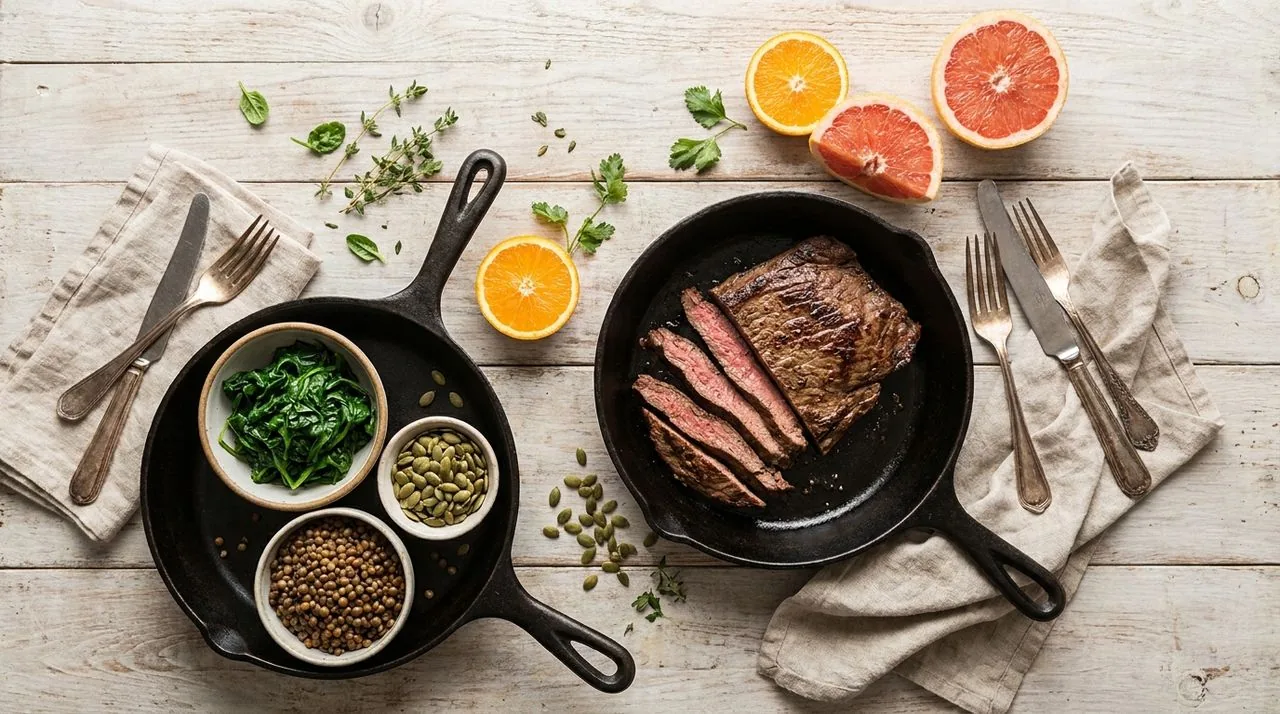
- Eat iron + vitamin C in the same meal — that is the main trick.
- Keep tea/coffee apart from iron-rich meals (tannins block absorption).
- Target ferritin above 50 µg/L; change within 8–12 weeks.
- Supplement only when needed and after medical advice — too much iron is harmful.
Low ferritin is a common cause of tiredness. A well-planned diet can often correct it. Here is a concrete plan. (For an explanation of the values, see Ferritin and iron.)
Step 1 — Iron from food, twice a day
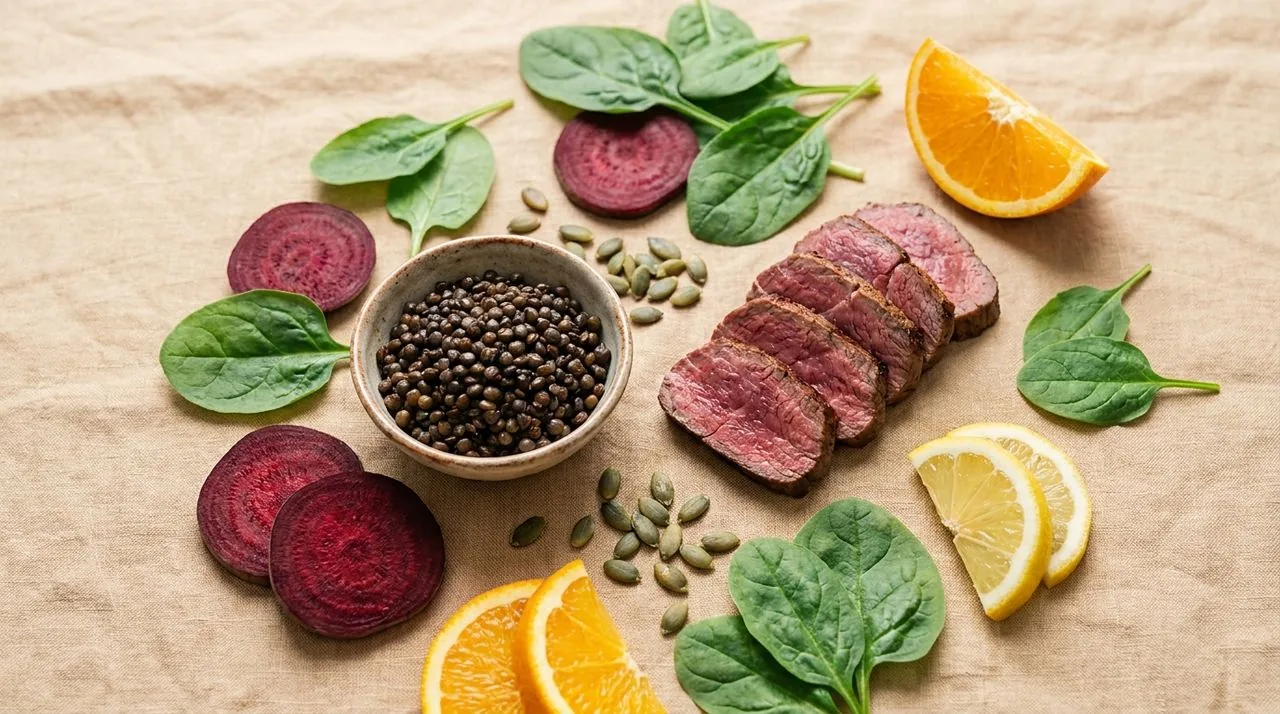
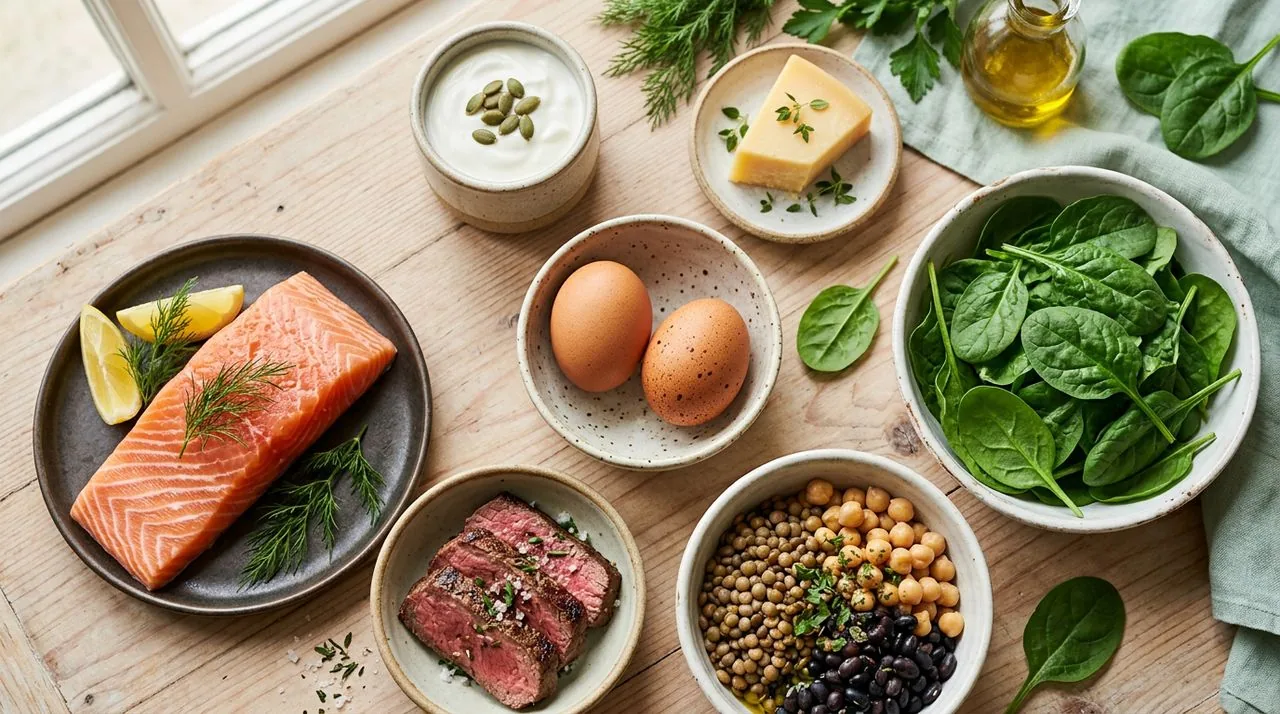
Haem iron from meat (beef, poultry) is absorbed best. Plant sources: legumes, spinach, pumpkin seeds, tofu.
Step 2 — Add vitamin C to the meal
Vitamin C greatly increases the absorption of plant iron (EFSA). In practice: peppers, citrus fruit, kiwi or lemon juice with a legume meal.
Step 3 — Separate the blockers
Tea, coffee and large amounts of calcium block absorption. Have them an hour before or after an iron-rich meal.
Step 4 — A supplement when needed
If ferritin stays low, a supplement is effective. It is often better tolerated at a lower dose or every other day. Agree the dose and duration with your doctor.
| Do | Avoid |
|---|---|
| legumes + peppers/citrus | coffee/tea with an iron-rich meal |
| red meat 1–2× a week | self-treating with high doses |
| follow-up test in 8–12 weeks | ignoring the cause of blood loss |
How do I know it's working? Repeat ferritin in 8–12 weeks. The target is above 50 µg/L — that is usually when your energy comes back.
How Blood Lab 360 helps you
Upload your report and we explain your ferritin (and your blood count, if included). We set a target and track your progress over time.
Frequently asked questions
How quickly can I raise ferritin?
With diet and, if needed, a supplement, stores improve noticeably within 8–12 weeks.
What increases iron absorption?
Vitamin C with the meal. Tea and coffee are best kept apart from iron-rich meals.
When does a supplement make sense?
When stores stay low despite diet; agree the dose with your doctor.